 THE
BLACK TORMENT (1964)
THE
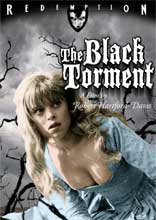
BLACK TORMENT (1964)THE BLACK TORMENT is one of the more obscure British horror films of the 1960s, barely seen by U.S. audiences since its theatrical run until it was first issued on DVD in 2005. Never as popular as similar films from Hammer or Amicus, it was produced and directed by the often slammed Robert Hartford-Davis (CORRUPTION, BLOODSUCKERS, THE FIEND) and presented by exploitation king Tony Tenser's and Michael Clinger's Compton Films. Tenser would soon go on to form Tigon Films and bankroll some of the most important genre efforts of the late 1960s and early 1970s. A famous anecdote has Tenser tearing out ten pages from THE BLACK TORMENT’s shooting script when the production fell behind!
 Like
many British gothics of the era, THE BLACK TORMENT was shot as a period piece
(on location and in and around Shepperton Studios) and is quite lavish for a
low budget effort. In the 18th century, wealthy aristocrat Sir Richard Fordyke
(John Turner, THE GIANT BEHEMOTH) returns from his honeymoon with new bride
Lady Elizabeth (Heather Sears, the heroine of Hammer’s THE PHANTOM OF
THE OPERA). Greeting him at the manor is his father (Joseph Tomelty, DEVIL GIRL
FROM MARS), a wheelchair-bound-stroke victim, and other tenants include Diane
(Ann Lynn, THE GIRL-GETTERS), the sister of Sir Richard's late first wife Anne,
and her cousin Seymour (Peter Arne, THE OBLONG BOX). Strange occurrences around
the manor have many in the village believing that Sir Richard is responsible
for the rape and murder of a girl named Lucy Judd – he was witnessed at
the scene of the crime, but it’s more likely that someone who resembles
him is responsible. To make matters more complicated, his first wife Anne –
who leaped from a window to her death years earlier – appears as a white-garbed
apparition and cries out "murderer" in the middle of the night!
Like
many British gothics of the era, THE BLACK TORMENT was shot as a period piece
(on location and in and around Shepperton Studios) and is quite lavish for a
low budget effort. In the 18th century, wealthy aristocrat Sir Richard Fordyke
(John Turner, THE GIANT BEHEMOTH) returns from his honeymoon with new bride
Lady Elizabeth (Heather Sears, the heroine of Hammer’s THE PHANTOM OF
THE OPERA). Greeting him at the manor is his father (Joseph Tomelty, DEVIL GIRL
FROM MARS), a wheelchair-bound-stroke victim, and other tenants include Diane
(Ann Lynn, THE GIRL-GETTERS), the sister of Sir Richard's late first wife Anne,
and her cousin Seymour (Peter Arne, THE OBLONG BOX). Strange occurrences around
the manor have many in the village believing that Sir Richard is responsible
for the rape and murder of a girl named Lucy Judd – he was witnessed at
the scene of the crime, but it’s more likely that someone who resembles
him is responsible. To make matters more complicated, his first wife Anne –
who leaped from a window to her death years earlier – appears as a white-garbed
apparition and cries out "murderer" in the middle of the night!
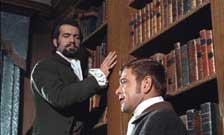 With
the opening murder of a beautiful, bosomy village girl (Edina Ronay, from Hammer’s
PREHISTORIC WOMEN) by an unseen assailant in the woods, the mood is set for
the horror and melodrama to follow. The film is a bit talky but never uninteresting,
with a sharply structured, if somewhat predictable script by Donald and Derek
Ford (of the "Holmes vs. the Ripper" classic, A STUDY IN TERROR, made
by Compton shortly after). The costumes and sets are all impressive, while the
shocks that come far and few between are worth the wait. The film’s style
comes closer to the color Italian horrors of the early 1960s rather than that
of Hammer, and the mix of costumes and ghosts sort of resembles“Wuthering
Heights” in execution. The acting sometimes comes across as hammy (with
John Turner really relishing the role), but the cast is quite capable. There
are a number of other performers in the cast associated with Hammer, including
Francis De Wolf (THE HOUND OF THE BASKERVILLES), Raymond Huntley (THE MUMMY)
and Patrick Troughton (SCARS OF DRACULA), and there’s a well-orchestrated
swordfight at the end. For those who collect English Gothic on DVD, THE BLACK
TORMENT can be recommended as a welcomed addition to the collection.
With
the opening murder of a beautiful, bosomy village girl (Edina Ronay, from Hammer’s
PREHISTORIC WOMEN) by an unseen assailant in the woods, the mood is set for
the horror and melodrama to follow. The film is a bit talky but never uninteresting,
with a sharply structured, if somewhat predictable script by Donald and Derek
Ford (of the "Holmes vs. the Ripper" classic, A STUDY IN TERROR, made
by Compton shortly after). The costumes and sets are all impressive, while the
shocks that come far and few between are worth the wait. The film’s style
comes closer to the color Italian horrors of the early 1960s rather than that
of Hammer, and the mix of costumes and ghosts sort of resembles“Wuthering
Heights” in execution. The acting sometimes comes across as hammy (with
John Turner really relishing the role), but the cast is quite capable. There
are a number of other performers in the cast associated with Hammer, including
Francis De Wolf (THE HOUND OF THE BASKERVILLES), Raymond Huntley (THE MUMMY)
and Patrick Troughton (SCARS OF DRACULA), and there’s a well-orchestrated
swordfight at the end. For those who collect English Gothic on DVD, THE BLACK
TORMENT can be recommended as a welcomed addition to the collection.
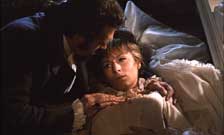 Redemption
previously released THE BLACK TORMENT on DVD in the U.S. through Image Entertainment
in the U.S. in 2005, and then again with the same transfer in 2009. Since it's
already been on DVD twice, you have to wonder why Redemption/Kino didn't release
it on Blu-ray this time out, as the new transfer was obviously mastered in HD
(and Odeon Entertainment is already promising a Blu-ray in the UK, likely from
the same source). Where the old DVD transfer was taken from a full frame source
with bland colors, here the film is presented in HD tranafer from the original
35mm elements, and it's 1.66:1 widescreen anamorphic. The new transfer is a
huge improvement, with bold colors, smooth detail and a very pristine film element
on display. Night scenes are now clear as can be (they were extremely dark on
the older transfer) and the overall beautiful image actually makes the film
more enjoyable at least in terms of appreciation of the handsome production
values. The English mono audio is also excellent, with crystal clear dialog
and the rousing score by Robert Richards (SCHOOL FOR UNCLAIMED GIRLS) coming
across nicely.
Redemption
previously released THE BLACK TORMENT on DVD in the U.S. through Image Entertainment
in the U.S. in 2005, and then again with the same transfer in 2009. Since it's
already been on DVD twice, you have to wonder why Redemption/Kino didn't release
it on Blu-ray this time out, as the new transfer was obviously mastered in HD
(and Odeon Entertainment is already promising a Blu-ray in the UK, likely from
the same source). Where the old DVD transfer was taken from a full frame source
with bland colors, here the film is presented in HD tranafer from the original
35mm elements, and it's 1.66:1 widescreen anamorphic. The new transfer is a
huge improvement, with bold colors, smooth detail and a very pristine film element
on display. Night scenes are now clear as can be (they were extremely dark on
the older transfer) and the overall beautiful image actually makes the film
more enjoyable at least in terms of appreciation of the handsome production
values. The English mono audio is also excellent, with crystal clear dialog
and the rousing score by Robert Richards (SCHOOL FOR UNCLAIMED GIRLS) coming
across nicely.
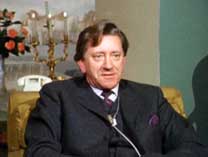 Extras
include a very rare interview with director Hartford-Davis (which was first
presented on the 2009 DVD), which lasts about 13 minutes long. Shot in color
and on film in 1968 (with excellent quality), Hartford-Davis is seen in an armchair
answering questions to Bernard Braden (at times, he's asked to start over again
to assure the perfect take). Hartford-Davis does make mention of his early profitable
exploitation films, but never alludes to any of his genre efforts (and he'd
done at least several by this time), concentrating mainly on the business aspects
of his profession, as well as his working relationship with Peter Newbrook (who
photographed BLACK TORMENT). Still, it's interesting to see the interview due
to its rarity, and he does acknowledge the significance of Hammer Films as an
industry player of the period. Trailers for THE BLOOD BEAST TERROR, VIRGIN WITCH,
KILLER'S MOON and BURK AND HARE round out the extras. (George
R. Reis)
Extras
include a very rare interview with director Hartford-Davis (which was first
presented on the 2009 DVD), which lasts about 13 minutes long. Shot in color
and on film in 1968 (with excellent quality), Hartford-Davis is seen in an armchair
answering questions to Bernard Braden (at times, he's asked to start over again
to assure the perfect take). Hartford-Davis does make mention of his early profitable
exploitation films, but never alludes to any of his genre efforts (and he'd
done at least several by this time), concentrating mainly on the business aspects
of his profession, as well as his working relationship with Peter Newbrook (who
photographed BLACK TORMENT). Still, it's interesting to see the interview due
to its rarity, and he does acknowledge the significance of Hammer Films as an
industry player of the period. Trailers for THE BLOOD BEAST TERROR, VIRGIN WITCH,
KILLER'S MOON and BURK AND HARE round out the extras. (George
R. Reis)